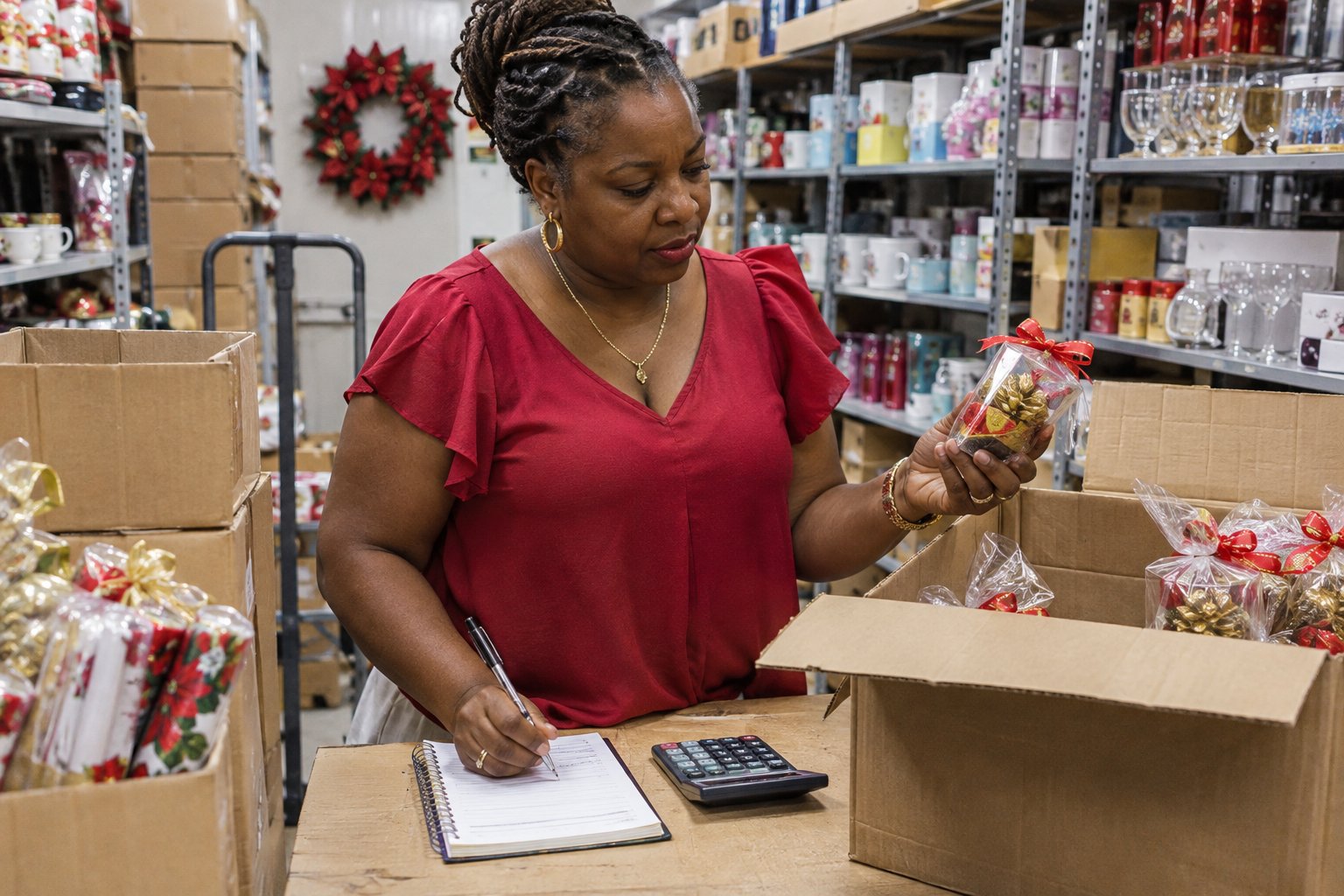
A stock order can make sense on margin while requiring more cash before the first sale than the business has available. This worked example tests the purchase dates, sales receipts and remaining stock.
Start with the payment terms on the quotation
Record the full stock cost, the deposit due now, the balance due before dispatch and the expected delivery date. Add any separately quoted transport or handling costs. Confirm whether quantities can be split across deliveries and whether the quotation has an expiry date. Use the actual terms from the supplier when they are available.
If part of the purchase is priced in a foreign currency, identify the currency and obtain the payment cost you would actually face. Keep an estimate clearly labelled until confirmed. This example uses Trinidad and Tobago dollars throughout so that the cash movements can be compared directly without an exchange-rate assumption.
Build an illustrative purchase schedule
Suppose the business has TT$18,000 available. The proposed stock order is TT$20,000 with a 50% deposit now and the remaining TT$10,000 before delivery in two weeks. Rent and wages of TT$6,000 are due before the stock is ready for sale. These are teaching figures, not a supplier quotation.
The deposit uses TT$10,000 and leaves TT$8,000. Paying rent and wages leaves TT$2,000. The TT$10,000 balance then creates a TT$8,000 funding gap before sales of the new stock begin. A forecast that enters the stock purchase only after delivery would conceal the earlier cash demand.
Show why the selling price does not solve the timing
Assume the entire shipment could sell for TT$32,000. Against the TT$20,000 purchase cost, the illustrative difference is TT$12,000 before other costs and any relevant tax treatment. That potential difference does not change the dates the supplier requires payment. The business still needs enough cash to get the stock into saleable condition.
List other costs consistently when evaluating the order. Delivery, packaging, payment charges and promotional spending may affect the amount ultimately retained. Keep them visible in the forecast. If one cost has already been included in the quoted stock total, cross-reference it so it is not deducted twice.
Test a smaller first order
Now suppose the supplier is willing to accept a TT$12,000 first order on the same 50% deposit terms. That requires TT$6,000 now, TT$6,000 of operating bills and TT$6,000 before delivery. With TT$18,000 available, those three payments consume the opening cash exactly. The arithmetic shows no remaining buffer.
Ask the supplier whether splitting the order is possible, what it does to the price and whether a later shipment can arrive in time. Use the supplier’s actual reply in the next forecast. A smaller order can change both cash exposure and the number of products available to sell, so compare the quantities and timing together.
| Full-order cash movement | Payment | Cash left |
|---|---|---|
| Opening cash | None | TT$18,000 |
| 50% supplier deposit | TT$10,000 | TT$8,000 |
| Rent and wages | TT$6,000 | TT$2,000 |
| Supplier balance | TT$10,000 | TT$8,000 short |
Distinguish a customer reservation from a receipt
Keep confirmed customer deposits separate from expressions of interest. Record what a customer has paid, what remains payable and the promised fulfilment date. If a deposit is refundable under the agreed terms, make that obligation visible in the planning record. A forecast should not assume that every conversation becomes available cash.
For example, five people saying they want an item gives you a list to follow up. Five matched payments of TT$200 gives you TT$1,000 of recorded receipts, with customer obligations attached. Show the corresponding balances due without counting the deposit again when the remaining amount is paid.
Run a slower-sales case
Move some expected sales receipts back by a week or two and calculate the lowest cash balance again. If the stock arrives late, move both its arrival and the earliest sale dates. Keep rent, wages and other committed dates where they actually fall. This reveals whether the plan depends on customers buying immediately after delivery.
Assume the revised forecast expects TT$5,000 of first-week receipts, but only TT$2,500 arrives. Record the TT$2,500 difference in that week and identify the bills it affects. Decide what can be rescheduled only after checking the relevant agreement. A forecast is most useful when it identifies the amount and date of a specific shortfall.
Track unsold stock through the period
Maintain quantities received, sold, returned and still held. A payment to a supplier and the remaining stock balance answer different accounting questions. IRD’s small-business guidance requires stock records and discusses valuation at the lower of cost or net realisable value, with consistent treatment across periods. [1] Ask your preparer how the year-end figures should be presented.
If the shop receives 100 units and sells 65, account for the remaining 35 units. Identify damage, returns or other movements separately. Check whether the physical count matches the recorded quantity. A cash forecast shows when money moves, while the stock sheet helps explain what the business still holds after the selling season.
Prepare a decision that can be reviewed
Put the original order, smaller-order option and slower-sales case side by side. For each, record the opening cash, deposit, balance, operating commitments, expected receipts and lowest cash point. Keep the supplier’s terms and the sales assumptions with the calculation. Identify who checked the figures and when.
If financing is being considered, confirm the lender’s document requirements and actual repayment terms before adding them. Republic Bank’s commercial checklist includes evidence supporting the request and a business plan for a new business. [2] BizReg’s cash flow projection service can help organise the forecast around your own figures and payment dates.
Questions business owners ask
Does a TT$8,000 cash gap mean the proposed order makes a loss?
The gap describes funding needed before receipts in the illustration. Profitability requires a separate review of selling prices, stock costs and other expenses.
Should the deposit and balance each be entered as the full order value?
Enter the actual payments. A TT$10,000 deposit plus TT$10,000 balance pays a TT$20,000 order. Counting the full cost again would overstate cash payments.
Can I use last Christmas’s sales?
Use them as evidence while recording changes in prices, stock range, opening hours and customers. Show the assumptions for this season explicitly.
What figures should I bring for a projection?
Bring supplier quotations, deposit and balance dates, available cash, operating commitments, expected sales receipts and existing finance terms.
Official references
Check the current source before making an application, as requirements and procedures can change.